Welcome to the ultimate guide on navigating the world of small business insurance! If you’re a small business owner, you’re probably juggling a million things at once. But there’s one crucial element that you shouldn’t overlook—insurance. It’s not just about ticking a box; it’s about safeguarding your hard work.
In this guide, we’ll dive deep into the three commercial insurance essentials every small business must consider. We’ll explore the different types of insurance, how they shield you from risks, and why they’re indispensable for your business’s survival and growth. Ready to become a small business insurance pro? Let’s get started!
Understanding Small Business Insurance
Did you know that 40% of small businesses never reopen after a disaster? That’s why having the right insurance is crucial.
Small business insurance is your financial safety net. It protects you from unexpected costs like lawsuits, property damage, or employee injuries. Without it, one incident could be a knockout punch to your business.
Types of Small Business Insurance
There are several kinds of insurance you need to consider. Here’s the deal: each type serves a specific purpose. For instance, general liability insurance covers bodily injuries and property damage that your business might cause. Meanwhile, professional liability insurance protects against claims of negligence.
Here’s a quick look at some key types of small business insurance and their benefits:
| Insurance Type | Coverage | Benefits | Example |
|---|---|---|---|
| General Liability | Bodily injury, property damage | Protects against claims made by third parties | A customer slips in your store |
| Professional Liability | Negligence, errors | Covers legal defense and settlements | An advice error by a consultant |
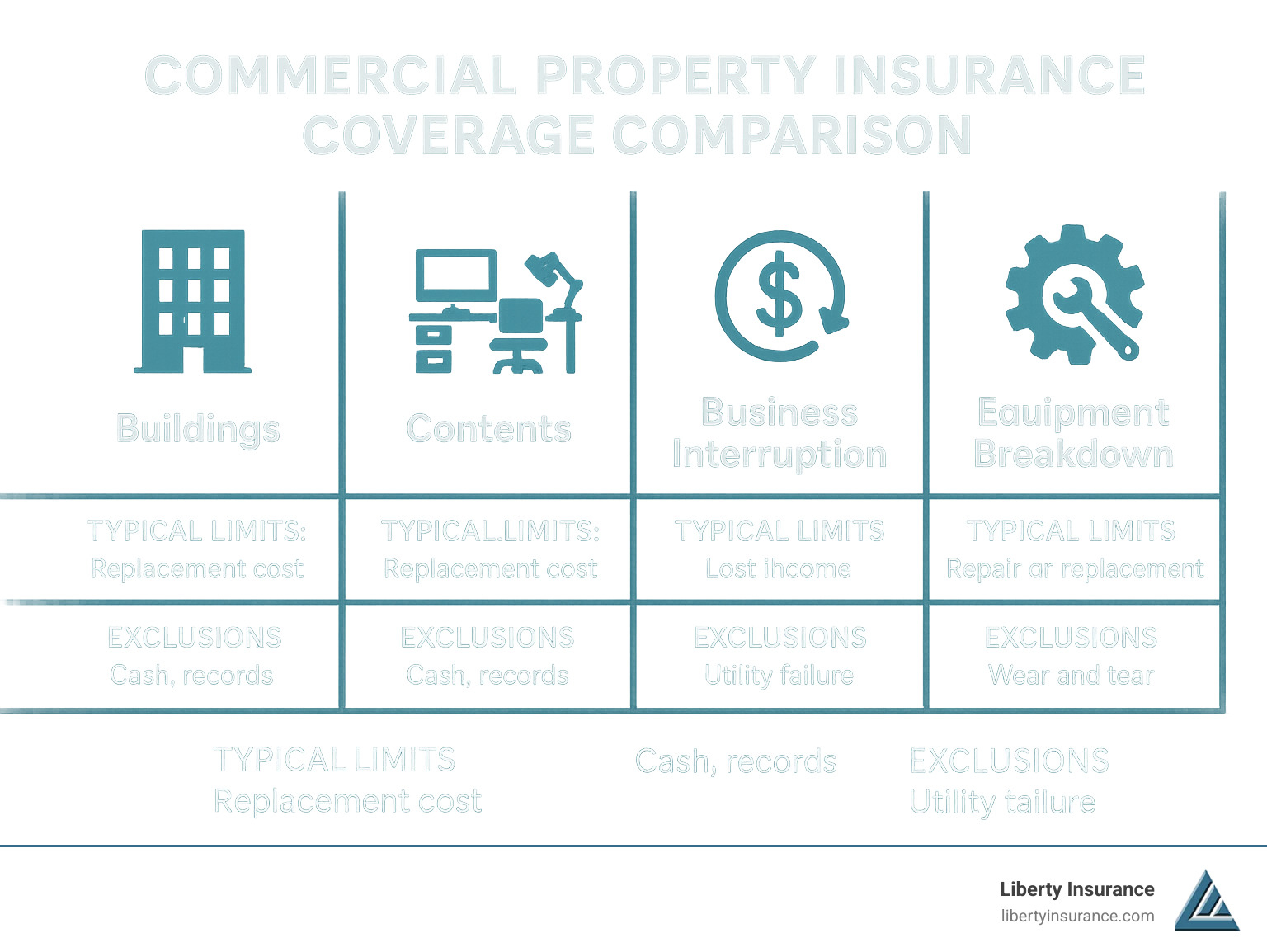
| Commercial Property | Damage to property or equipment | Replaces or repairs damaged assets | Fire damages office equipment |
| Business Interruption | Loss of income during disruptions | Compensates for lost revenue | A natural disaster halts operations |
Protection Against Industry Risks
Small businesses face unique risks based on their industry. For example, a restaurant might need more protection against food spoilage or kitchen fires, while a tech startup worries more about digital data breaches. Step #1: Understand your industry-specific risks. Step #2: Get insurance tailored to those threats.
Pro Tip: Customize your policy by working with an agent who understands your industry’s nuances.
Remember, insurance isn’t just a checkbox—it’s peace of mind. With the right coverage, you’re not just protecting a business; you’re safeguarding your dream.
Importance of Commercial Insurance for Small Businesses
Think your small business is invincible? Think again. According to the U.S. Small Business Administration, 40% of small businesses never reopen after a disaster.
This is where commercial insurance steps in. It acts as a financial safety net, protecting your business from unforeseen events that could otherwise wipe you out.
The Role of Commercial Insurance in Safeguarding Small Businesses
Commercial insurance is like your business’s personal bodyguard. It shields you from significant financial losses due to property damage, liability claims, or employee injuries. Imagine a scenario where a customer slips in your store and decides to sue. Without insurance, you could face crippling legal fees. But with the right policy, you’re covered.
Beyond lawsuits, consider the potential loss if a fire or flood damages your premises. Commercial insurance can help cover repair costs and lost income. It’s not just about surviving; it’s about thriving even when the unexpected strikes.
Scenarios Where Commercial Insurance is Crucial
You might be thinking, “Do I really need this?” Let’s break it down. If you own a restaurant, commercial liability insurance helps in cases of foodborne illnesses. For a retail store, property insurance protects your inventory from theft or disasters. And if you’re in consulting, professional liability insurance covers you against claims of negligence or errors in your work.
- Restaurant: Liability for foodborne illnesses.
- Retail: Property protection for inventory.
- Consulting: Covering claims of negligence.
Real-world Examples of Small Businesses Benefiting from Insurance
Meet Joe, a bakery owner who experienced a fire in his kitchen. Thanks to his commercial insurance, Joe received compensation for repairs and temporary closure losses. Or let’s talk about Sarah, who runs a consultancy. She faced a lawsuit over alleged incorrect advice. Her professional liability insurance covered the legal costs, saving her business.
“Insurance isn’t just an expense. It’s an investment in your business’s future.”
Key Factors Influencing the Choice of Commercial Insurance
Choosing the right commercial insurance is crucial. Here is the deal: consider your industry risks, business size, and budget. For instance, a tech startup might prioritize cyber liability insurance, while a construction firm focuses on workers’ compensation. Other considerations include the policy’s coverage limits, exclusions, and the insurer’s reputation.
| Factor | Considerations |
|---|---|
| Industry Risks | Identify specific threats relevant to your field. |
| Business Size | Influences the scope and scale of coverage needed. |
| Budget | Balance between cost and comprehensive protection. |
| Coverage Limits | Ensure limits align with potential financial exposure. |
| Insurer’s Reputation | Choose a reliable provider with positive reviews. |
Key Components of a Small Business Insurance Policy

Did you know that 40% of small businesses never reopen after a disaster? That’s where insurance comes into play. But what exactly are the key components of a small business insurance policy?
Here is the deal: understanding these components can mean the difference between a speedy recovery and a complete shutdown. Let’s dive into the essential elements that every small business owner should consider when crafting their insurance policy.
Essential Elements of a Small Business Insurance Policy
A solid insurance policy isn’t just a safety net—it’s a toolkit for risk management. Most policies include:
- General Liability Insurance: Protects against lawsuits and claims of negligence or harm.
- Property Insurance: Covers damage to physical assets like buildings and equipment.
- Workers’ Compensation: Provides coverage for employees injured on the job.
- Professional Liability Insurance: Also known as errors and omissions insurance, it covers negligence in professional services.
- Commercial Auto Insurance: Necessary if your business uses vehicles for operations.
Each of these components serves a unique purpose, and choosing the right combination is critical.
Comparing Different Insurance Policies
Not all policies are created equal. Here’s a quick comparison to help you see the differences:
| Policy Type | Coverage Focus | Typical Cost Range |
|---|---|---|
| General Liability | Lawsuits and third-party injuries | $300 – $1,000 annually |
| Property Insurance | Physical property damage | $500 – $2,500 annually |
| Workers’ Compensation | Employee injuries | $0.75 – $2.74 per $100 of payroll |
Pro Tip: Always compare policies from at least three providers. This can save you up to 30% on premiums.
Customizing Insurance Policies for Specific Business Needs
Every business is unique, and so should be its insurance policy. Customizing your policy involves assessing risks and tailoring coverage.
- Identify specific risks related to your industry.
- Consider adding cyber liability insurance if you handle sensitive data.
- If you run a home-based business, don’t forget to adjust your home insurance.
Customization ensures that you are not paying for unnecessary coverage while keeping you protected where it matters most.
Cost and Budget Considerations for Business Insurance

Do you know what the average small business spends on insurance each year? It’s more than you might think, BUT understanding why can help you manage these costs like a pro.
The cost of business insurance isn’t one-size-fits-all. It varies based on several factors including industry, location, and the coverage limits you choose. Here is the deal: You can optimize your coverage without breaking the bank.
Factors Affecting Business Insurance Costs
Let’s dive into the factors that impact what you pay. First, the industry you’re in plays a huge role. A construction business is going to have different risks compared to a consulting firm, for instance. Next, your location matters. Are you in a flood-prone area? Expect higher premiums. Finally, the coverage limits you select will also affect your bottom line. More coverage generally means more cost.
Optimizing Insurance Coverage on a Budget
Want to save money while staying protected? Consider bundling your policies with one provider for a discount. Another method is to raise your deductible (just make sure you can cover it if something happens). And always shop around. Insurance companies vary widely in what they charge. Check out this table comparing costs:
| Business Size | Low Risk Industry | Medium Risk Industry | High Risk Industry |
|---|---|---|---|
| Small | $500 | $1,000 | $1,500 |
| Medium | $1,000 | $2,000 | $3,000 |
| Large | $2,000 | $4,000 | $6,000 |
Strategies to Manage Insurance Expenses
Managing your insurance expenses isn’t just about cutting costs. It’s about balancing coverage with what you can afford. Step #1: Review your policies annually. Needs change, and so should your coverage. Step #2: Implement safety measures. Fewer claims can lead to lower premiums. Step #3: Ask for discounts. Many insurers offer them for things like a claims-free history.
Pro Tip: “Increasing your deductible can lower your premium by as much as 20%—but only if you’re prepared to pay more out-of-pocket.”
Legal and Regulatory Requirements
Did you know that failing to comply with insurance regulations could sink your business? Here’s the deal: understanding the legal landscape of business insurance isn’t just smart—it’s necessary.
Every business is unique, but all are bound by certain legal requirements when it comes to insurance. These regulations vary based on location, industry, and business size, but they’re non-negotiable. Compliance ensures you’re not just abiding by the law but also protecting your company from potentially devastating financial consequences.
Compliance and Its Impact on Business Operations
Compliance with insurance regulations isn’t just about dodging fines; it directly affects your business operations. When you’re compliant, you’re protecting your assets, employees, and even your reputation. On the flip side, non-compliance could lead to hefty fines, legal battles, or even shutting down operations. Think about it: can your business afford to be non-compliant?
Consequences of Non-Compliance
Non-compliance doesn’t just mean a slap on the wrist. It could mean crippling fines, lawsuits, and even business closure. The stakes are high, and ignorance is no excuse. Many small business owners underestimate these consequences until it’s too late. Here’s a shocking stat: over 40% of small businesses close within a year after facing significant legal issues.
Checklist of Legal and Regulatory Insurance Requirements
Let’s simplify things. Here’s a checklist to ensure you’re in the clear:
- Research state-specific insurance requirements for your industry.
- Ensure you have General Liability Insurance.
- Consider Workers’ Compensation Insurance if you have employees.
- Evaluate the need for Professional Liability or Errors and Omissions Insurance.
- Double-check that your insurance policy meets industry-specific mandates.
- Regularly review and update your policies to match current regulations.
Pro Tip: Always consult with a legal expert or professional insurance advisor to ensure full compliance.
Future Trends in Small Business Insurance
Ever wonder how small business insurance will look in the next decade? It’s changing faster than you think. Let’s dive into what’s transforming this essential business element.
Emerging Trends in the Small Business Insurance Industry
Insurance isn’t static. It’s evolving, and faster than ever. We’re seeing a shift towards customized policies tailored to individual business risks. This means more flexibility and potentially lower costs for you. BUT, it also means you need to stay on top of these changes to take full advantage.
Here’s the deal: as businesses become more digitized, insurance companies are leveraging big data to assess risk more accurately. This means better insights and fairer premiums. Are you ready to ride this wave?
Potential Changes in Regulations Affecting Business Insurance
Regulations can make or break your business. And they’re not standing still. We’re seeing a push for more transparency and sustainability in insurance policies. This could mean more paperwork for you, but also more protection.
Pro Tip: Keep an eye on your local and national legislative updates. They can significantly impact your coverage and costs.
Impact of Technological Advancements on Business Insurance Solutions
Technology isn’t just for tech companies. It’s reshaping how small businesses approach insurance. Think IoT devices monitoring your assets in real-time and AI-driven customer service that resolves claims in minutes. This isn’t science fiction. It’s happening now.
As technology scales, it offers you more opportunities to minimize risks and reduce costs. BUT remember, adopting new tech requires upfront investment and training.
Forecast of Future Developments in Small Business Insurance
So, what’s on the horizon? Expect insurance to become more predictive, using advanced analytics to anticipate risks before they happen. This could mean fewer claims and lower premiums for businesses like yours.
The future of small business insurance is in real-time risk management and predictive analytics.
Is your business ready to adapt to these changes? Now’s the time to act.
Summary
As we wrap up this deep dive into small business insurance, remember that the right policy is not just a safety net—it’s a strategic asset. With the right coverage, you’re not just protecting your business; you’re empowering it to thrive amidst challenges. Stay informed, stay insured, and watch your business soar to new heights.
Q&A
What are the main types of small business insurance?
The main types include general liability, property insurance, workers’ compensation, and professional liability insurance.
Why is commercial insurance important for small businesses?
Commercial insurance is crucial as it protects your business from significant financial losses due to unforeseen events such as lawsuits, natural disasters, or accidents.
How does small business insurance protect against risks?
It offers financial protection by covering costs associated with liability claims, property damage, employee injuries, and more, depending on the policy.
What factors influence the cost of business insurance?
Factors include the type of business, location, coverage limits, number of employees, and claims history.
Can I customize my small business insurance policy?
Yes, most insurers allow customization to tailor coverage to specific needs and risks associated with your business.
